Tampilkan postingan dengan label science. Tampilkan semua postingan

Side Effects of Watching 3D TV

While searching for a 3D TV, I cam across this health warning about the possibly dangerous effects of watching 3D television that was released by Samsung.

                   Photosensitive Seizure Warning and Other Health Risks
�Some viewers may experience an epileptic seizure or stroke when exposed to certain flashing images or lights contained in certain television pictures or video games. If you or any of your family has a history of epilepsy or stroke, please consult with a medical specialist before using the 3D function.

�If you experience any of the following symptoms, immediately stop watching 3D pictures and consult a medical specialist: (1) altered vision; (2) lightheadedness; (3) dizziness; (4) involuntary movements such as eye or muscle twitching; (5) confusion; (6) nausea; (7) loss of awareness; (8) convulsions; (9) cramps; and/or (10) disorientation. Parents should monitor and ask their children about the above symptoms as children and teenagers may be more likely to experience these symptoms than adults.

�Viewing in 3D mode may also cause motion sickness, perceptual after effects, disorientation, eye strain, and decreased postural stability. It is recommended that users take frequent breaks to lessen the likelihood of these effects. If you have any of the above symptoms, immediately discontinue use of this device and do not resume until the symptoms have subsided.

�We do not recommend watching 3D if you are in bad physical condition, need sleep or have been drinking alcohol.

�Watching TV while sitting too close to the screen for an extended period of time may damage your eyesight. The ideal viewing distance should be at least three times the height of the TV screen. It is recommended that the viewer�s eyes are level with the screen.

�Watching TV while wearing 3D Active Glasses for an extended period of time may cause headaches or fatigue. If you experience a headache, fatigue or dizziness, stop watching TV and rest.

�Do not use the 3D Active Glasses for any purpose other than viewing 3D television. Wearing the 3DActive Glasses for any other purpose (as general spectacles, sunglasses, protective goggles, etc.) may physically harm you or weaken your eyesight.

�Viewing in 3D mode may cause disorientation for some viewers. DO NOT place your television near open stairwells, cables, balconies or other objects that may cause you to injure yourself.

Source: Samsung

'Supermoon' of March 19th @ Saturday Night

On Saturday afternoon at 3 p.m. EST, the moon was at its closest point to the Earth in 2011: a distance of 221,565 miles away.


At its peak, the supermoon of March was 14 percent larger and 30 percent brighter than lesser full moons (when the moon is at its farthest from Earth). But to the casual observer, it may be hard to tell the difference.

The moon has not been in a position to appear this large since March 1993.

In December 2008, there was a near-supermoon when the moon turned full four hours away from its perigee � the point in its orbit that is closest to Earth. But this month, the full moon and perigee are just under one hour apart, promising spectacular views, depending on local conditions.

Although a full moon theoretically lasts just a moment, that moment is imperceptible to ordinary observation.

During the day or so before and after, most will speak of seeing the nearly full moon as "full," with the actual shaded area of the lunar surface being so narrow � and changing in apparent width so slowly � that it is hard for the naked eye to tell whether it's present, or which side it is.

Supermoon making waves

In addition, the near coincidence of Saturday�s full moon with perigee will result in a dramatically large range of high and low ocean tides.

The highest tides will not, however, coincide with the perigee moon but will actually lag by up to a few days depending on the specific coastal location. For example, in Wilmington, N.C., the highest tide (5.3 feet) will be attained at 11:21 p.m. EDT on March 20.

In New York City, high water (5.9 feet) at The Battery comes at 10:49 p.m. EDT on March 21, while at Boston Harbor, a peak tide height of 12.2 feet comes at 1:31 a.m. EDT on March 22, almost 2 1/2 after perigee.

But then, to those living on the shores near the Bay of Fundy in eastern Canada, the 10- to 20-foot (3- to 6-meter) increase in the vertical tidal range makes it obvious when the Moon lies near perigee, clear skies or cloudy.

Any coastal storm at sea around this time will almost certainly aggravate coastal flooding problems.

Such an extreme tide is known as a perigean spring tide, the word spring being derived from the German springen � to "spring up," and is not, as is often mistaken, a reference to the spring season.

Understanding Hydrogen Explosions at Fukushima nuclear complex in Japan

The Hydrogen Explosions at Fukushima nuclear complex in Japan was result of the effort to prevent the meltdown of the core.
The core which contains fuel rods is inside a 6 inches thick stainless steel vessel.
Water is being injected into the vessel to keep the temperature for rising to the level were it will melt down.

This process results in generation for steam and hydrogen and in order to release the pressure inside the vessel it released in to atmosphere.
The hydrogen combines with atmospheric oxygen resulting in big explosions.


The blast actually lessened pressure building inside the troubled reactor, and officials said the all-important containment shell - thick concrete armor around the reactor - had not been damaged.
In that case, the uranium core can melt through the outer containment shell, releasing radioactive byproducts like iodine and cesium. That endangers the environment and people nearby.

Bioluminescence of Noctiluca scintillans

Recent floods in Australia has result in abundant proliferation of Noctiluca scintillans, commonly known as the Sea Sparkle resulting some breath taking Bioluminescent spectacle. For a cluster of lakes in Australia's eastern Victoria, the combination of the fire and then the rain washed ash and nitrogen-rich soil into the water. The Gippsland Lakes experienced a rise in sea level. That caused the lakes to mix with sea water, which also raised the salinity.


As you can see blow the bioluminescent brew has gaven the water a nocturnal glow.
Courtecy:Phil Hart/ http://www.philhart.com/

Noctiluca scintillans  a species of algae , also called  Noctiluca miliaris, is a free-living non-parasitic marine-dwelling species of dinoflagellate that exhibits bioluminescence. The bioluminescent characteristic of N. scintillans is produced by a luciferin-luciferase system located in thousands of spherically shaped organelles, or �microsources�, located throughout the cytoplasm of this single-celled protist. Nonluminescent populations within the genus Noctiluca lack these microsources.

Technological way to attain Immortality-Mind Uploading

One of the futuristic ways to achieve immortality may be to consider the prospect of �mind-uploading�, that is, the transfer of the mind�s information to a machine. Hence, even if the organic brain dies, the mind could continue to exist once it is uploaded in a silicon-based machine.


Some scientists think that even if it were not possible to indefinitely suspend the body�s death, it would at least be possible to emulate the brain with artificial intelligence (Kurzweil, 1993; Moravec, 2003).

Two crucial philosophical issues are raised by this prospect. First, the field of philosophy of artificial intelligence raises the question: could a machine ever really be conscious? Philosophers who adhere to a functionalist understanding of the mind would agree; but other philosophers would not (Consider Searle�s Chinese Room Argument in Searle, 1998).

Even if we were to claim that a machine could in fact be conscious, the technological prospect of mind uploading raises a second philosophical issue: would an emulation of the brain preserve personal identity? If we adhere to a soul or body criterion of personal identity, we should answer negatively. If we adhere to a psychological criterion of personal identity, then we should answer affirmatively, for the artificial brain would indeed be psychologically continuous with the original person.

Stuxnet

If you don�t know it already, Stuxnet is a worm that could take control of industrial equipment. It is widely believed that its target was machinery used to enrich uranium.


Stuxnet first came to light in July 2010. Nearly 60% of reported infections were inside Iran.

The worm targets industrial control systems, known as programmable logic controllers (PLCs), made by Siemens.

While PLCs are used to control a wide variety of automated systems, it is believed that it was those inside Iran's nuclear facilities that were the intended target.

Analysts who have examined the Stuxnet code say it could have been used to damage centrifuges which play a crucial role in the process of enriching uranium for both nuclear power and weapons.

In a recent report on Stuxnet, the security firm Symantec said that it would have taken a team of between five and 10 developers, six months to create the worm.


Now we have world's first anti-laser

A team of Physicist at Yale University, have built the world's first device that can cancel out a laser beam - a so-called anti-laser which is capable of absorbing an incoming laser beam entirely. Their device focuses two lasers beams of a specific frequency into a specially designed optical cavity made from silicon, which traps the incoming beams of light and forces them to bounce around until all their energy is dissipated.


In a paper published in the journal Science they demonstrated that the anti-laser could adsorb 99.4 per cent of incoming light, for a specific wavelength.

Altering the wavelength of the incoming light means that the anti-laser can effectively be turned on and off - and that could be used in optical switches.

The anti-laser's big advantage is that it is built using silicon, which is already widely used in computing.

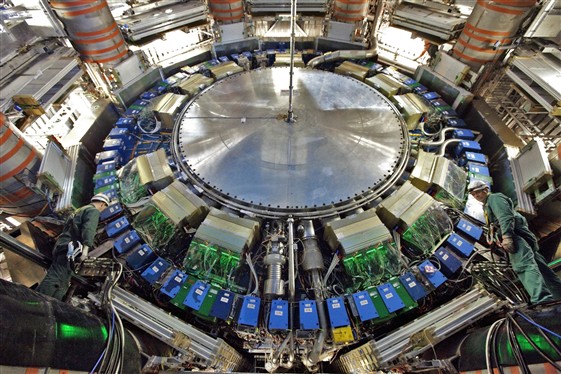
Large Hadron Collider -Update

Large Hadron Collider experiment is on track to discover new physics. On 31 January 2011. CERN announced that the LHC will run through to the end of 2012 with a short technical stop at the end of 2011. The beam energy for 2011 will be 3.5 TeV. LHC�s experiments a good chance of finding new physics in the next two years, before the LHC goes into a long shutdown to prepare for higher energy running starting 2014.


The LHC was previously scheduled to run to the end 2011 before going into a long technical stop necessary to prepare it for running at its full design energy of 7 TeV per beam. However, the machine�s excellent performance in its first full year of operation forced a rethink. Expected performance improvements in 2011 should increase the rate that the experiments can collect data by at least a factor of three compared to 2010. That would lead to enough data being collected this year to bring tantalising hints of new physics, if there is new physics currently within reach of the LHC operating at its current energy. However, to turn those hints into a discovery would require more data than can be delivered in one year, hence the decision to postpone the long shutdown. If there is no new physics in the energy range currently being explored by the LHC, running through 2012 will give the LHC experiments the data needed to fully explore this energy range before moving up to higher energy.

Sun is sputtering X-flare

The Sun has unleashed its strongest flare in four years the so-called X-flare, the strongest type; such flares can affect communications on Earth


The eruptions are expected to hit the Earth's magnetic field field over the next couple of days, causing an increase in geomagnetic activity.

The monster flare was recorded at 0156 GMT on 15 February and directed at the Earth. According to the US space agency, the source of this activity - sunspot 1158 - is growing rapidly.

Solar flares are caused by the sudden release of magnetic energy stored in the Sun's atmosphere.

Preliminary data from the Stereo-B and Soho spacecraft suggest that the explosion produced a fast but not particularly bright coronal mass ejection (CME) - a burst of charged particles released into space.

The unpredictable activity on the Sun can interfere with modern technology on Earth, such as electrical power grids, communications systems and satellites - including the satellite navigation (or sat-nav) signals used on Earth.

In 1972, geomagnetic storm provoked by a solar flare knocked out long-distance telephone communication across the US state of Illinois.

And in 1989, another storm plunged six million people into darkness across the Canadian province of Quebec.

Displays of the Northern Lights (Aurora Borealis) have already been seen further south than usual in Northern Ireland and elsewhere in the UK. And further activity is expected over the next few days.

Researchers say the Sun has been awakening after a period of several years of low activity.

how much Arctic Ice has melted in 30 years?

A combination of the National Oceanic and Atmospheric Administration (NOAA) images show September Arctic sea ice in 1979, the first year these data were available, and 2009 in this image from a report released on July 28, 2010. The areas of ice coverage range from 15 percent coverage (darker shades of medium blue) to complete coverage (lightest blue). The light circles over the pole indicate areas where there are no data from this satellite instrument. Dark blue is open ocean. September Arctic sea ice is one of the 10 key indicators of a warming planet. Melting glaciers, more humid air and eight other key indicators show that global warming is undeniable, scientists said on Wednesday, citing a new comprehensive review of the last decade of climate data.

Metals That Heal Themselves

A nuclear reactor is a grueling place for the metals there�all the wear-and-tear caused by neutron activities inside the reactor can make them swell and become brittle over time.
Researchers at Los Alamos National Laboratory in New Mexico have shown that by altering the microstructure of metals, metallurgists may be able to make reactor parts that are self healing.
Blas P. Uberuaga, Xian-Ming Bai and colleagues conducted computer simulations of the long-term impact of neutron emissions on copper � not because much copper is used in nuclear plants, but because it is a relatively well-modeled metal. Their findings are published in Science.
When a neutron hits metal, it displaces atoms within the crystal lattice. In a metal with a largely uniform structure, these atoms move to the surface, eventually causing the metal to swell, and the vacancies they leave behind can lead to voids that further weaken the material.
But it is possible to fabricate metals that have a nonuniform structure, with very small crystal grains, or regions of different phase or orientation. When atoms are displaced in this nanocrystalline material, rather than traveling to the surface they migrate to the boundaries between the grains. In their simulations, the researchers found that these atoms can then travel back away from the boundary and, if they find a vacancy, fill it, in effect healing the defect.

Bacteria are �big thinkers�

Scientists at the University of Tennessee, Knoxville have found that bacteria are �big thinkers� and more capable of complex decision-making than previously thought, a discovery that could lead to innovations in medicine and agriculture fields.Until now, scientists have been unable to study how bacteria�s individual receptors directly affect their behaviour and ability to adapt to the environment.


Gladys Alexandre and her team looked at the functioning of complex soil bacterium Azospirillum brasilense�s receptors. And they came to the conclusion that with the help of the amino acids in the sensory part of the receptor, bacteria can feel about the environment around them.

Paper and Cloth Batteries

If a team of researchers at Stanford University are to be believed, Batteries made from plain copier paper could make for future energy storage that is truly paper thin.
These guys started with off-the-shelf copier paper, painting it with an "ink" made of carbon nanotubes-tiny cylinders of carbon - to collect electric charge..
The coated paper is then dipped in lithium-containing solutions and an electrolyte to provide the chemical reaction that generates a battery's electric current.
The paper acts to collect the electric charge from the reaction. Using paper in this way could reduce the weight of batteries, typically made with metal current collectors, by 20%.
The team's batteries are also capable of releasing their stored energy quickly. That is a valuable characteristic for applications that need quick bursts of energy, such as electric vehicles - although the team has no immediate plans to develop vehicle batteries.
The team says that adaptations to the technique in the future could allow for simply painting the nanotube ink and active materials onto surfaces such as walls.
They have even experimented with a number of textiles, paving the way for batteries made largely of cloth.
Their work is published in Proceedings of the National Academy of Sciences.

Rydberg Molecule--strange first

Back in 1934 Enrico Fermi predicted that if another atom were to "find" that lone, wandering electron, it might interact with it but he never imagined that molecules could be formed.
Recently Vera Bendkowsky and his team from the University of Stuttgart created such a molucle known as a Rydberg molecule; this is formed through an elusive and extremely weak chemical bond between two atoms.
The Rydberg molecules in question were formed from two atoms of rubidium - one a Rydberg atom, and one a "normal" atom.
The movement and position of electrons within an atom can be described as orbiting around a central nucleus - with each shell of orbiting electrons further from the centre.
A Rydberg atom is special because it has one electron alone in an outermost orbit - very far, in atomic terms, from its nucleus.
Unimaginably cold temperatures are needed to create the molecules.At temperatures very close to absolute zero - minus 273C - this "critical distance" of about 100nm (nanometres - 1nm = one millionth of a millimetre) between the atoms is reached.
When one is a Rydberg atom, the two atoms form a Rydberg molecule. This 100nm gap is vast compared to ordinary molecules
Pushing this electron out to its lonely periphery - and make a Rydberg atom - requires energy.
This ultracold experiment is also ultra-fast - the longest lived Rydberg molecule survives for just 18 microseconds.
But the fact that the molecules can be made and seen confirms long-held fundamental atomic theories.

New Artificial Heart

Dr Alain Carpentier's new artificial heart look very real expect for the colour and texture.The device is designed to be as similar as possible to the human heart

The device beats almost exactly like the real thing using electronic sensors to regulate heart rate and blood flow.
Developers Carmat now need approval from the French authorities before pushing ahead with clinical trials.
Several teams from around the world have been working to develop the perfect artificial heart that could be fitted into the 20,000 patients worldwide unable to receive a life-saving heart transplant because of a shortage of donor organs.
The new heart is covered with specially treated tissue to avoid rejection by the body's immune system and the formation of blood clots.
However, the power supply for the heart remains a significant hurdle.
Carmat, the company founded by Professor Carpentier and Europe's aerospace and defence giant EADS, says the battery could last for between five and 16 hours after which it would have to be recharged to prevent the artificial heart stopping.
Professor Carpentier's team is studying two options that do not require wires crossing the skin because these pose an infection risk. Professor Carpentier said the heart was necessary given the chronic shortage of heart donors and growing heart patient waiting lists.

The Large Hadron Collider experiment has stoped

CERN announced on Thursday that it had shut down the collider a week ago after a successful start-up that had beams of protons circling in both clockwise and counterclockwise directions in the collider.
It was at first thought the failure of an electrical transformer that handles part of the cooling was the problem, CERN said. That transformer was replaced last weekend and the machine was lowered back to operating temperature to prepare for a resumption of operations.

But later it turned out to be a much serious problem. A faulty electrical connection between two magnets that stopped superconducting, melted and led to a mechanical failure and let the helium out and this will keep it out of commission for at least two months.